
Idea Development: Great ideas don't become great projects by accident
Updated: Aug 19
Why investing time in idea development creates stronger projects, better decisions and lasting impact.

Every successful project begins with an idea—but not every idea becomes a successful project. Whether you're responding to a new opportunity, developing a service or planning organisational change, the temptation is often to move quickly from concept to delivery. Yet many projects experience avoidable challenges because the thinking that should have happened before delivery was overlooked.
Strong ideas don't happen by chance. They are explored, challenged and refined until everyone understands the problem being solved, the outcomes being sought and the value the project will create.
Taking time to invest in idea development before moving into project design creates stronger foundations, clearer decisions and a greater chance of delivering lasting impact.
IN THIS INSIGHT…
Why good ideas often fail before delivery begins
The difference between an idea and a well-developed project
Common mistakes organisations make during the planning stage
A practical framework for strengthening ideas
Why investing time early leads to better outcomes later
EVERY SUCCESSFUL PROJECT STARTS LONG BEFORE DELIVERY
Every organisation has ideas. Some emerge from conversations with colleagues. Others grow from feedback, changing regulations, funding opportunities or a desire to improve services.
Often, they begin with genuine enthusiasm and a commitment to making a positive difference. That enthusiasm is valuable. However, enthusiasm alone doesn't create successful projects.
Many organisations feel pressure to make progress quickly. There may be funding deadlines to meet, operational challenges to resolve or leadership expectations to satisfy. In response, conversations often move rapidly towards budgets, timelines and delivery plans.
The problem is that delivery is sometimes discussed before everyone agrees on exactly what is being delivered—and, more importantly, why.
Successful projects rarely succeed because someone had a brilliant idea. They succeed because the idea was carefully developed before anyone began planning how to deliver it.
REFLECTION:
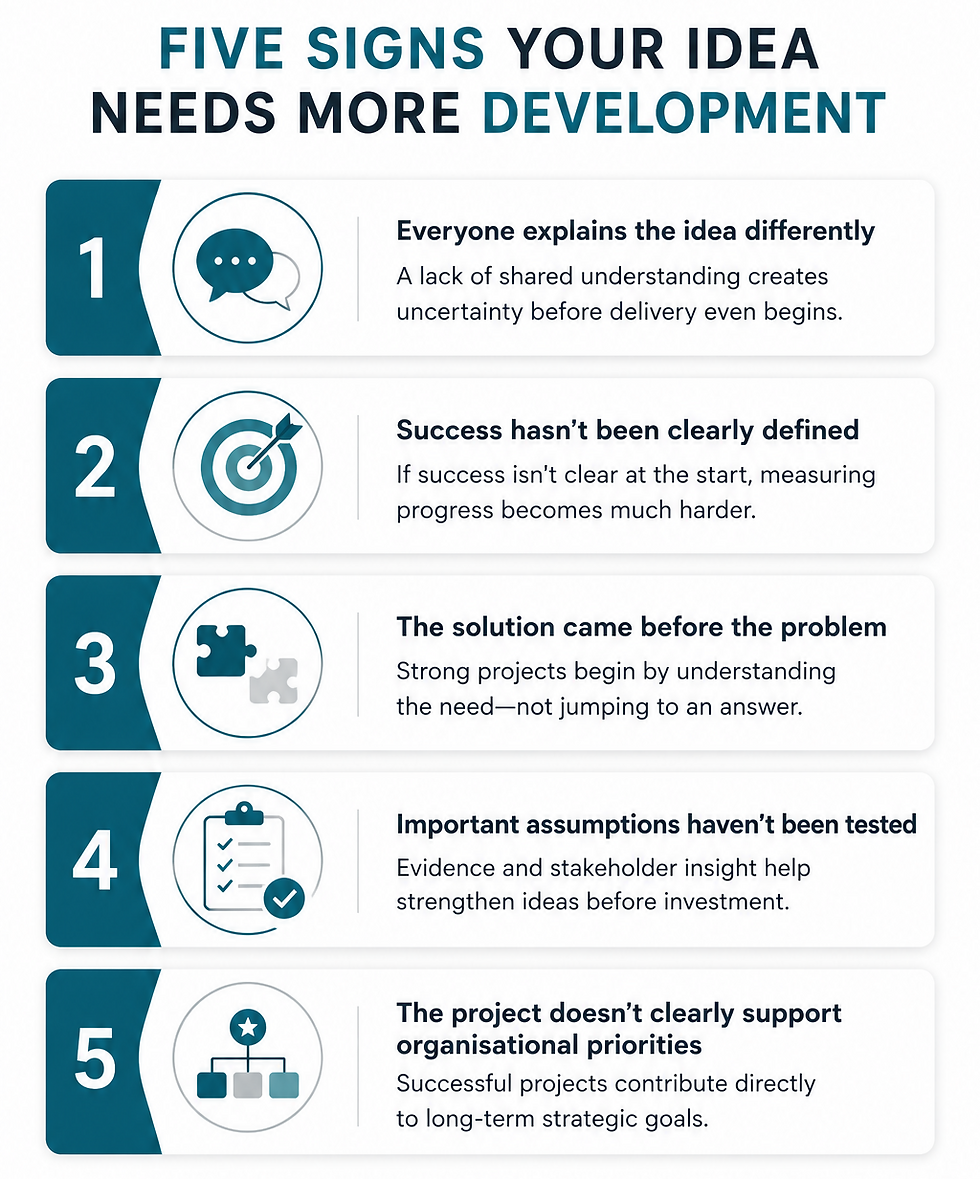
If everyone in your organisation described your next major project, would they all tell the same story?
If different people have different interpretations of the project's purpose or expected outcomes, it may be a sign that the idea needs further development before moving into delivery.
AN IDEA IS THE BEGINNING, NOT THE DESTINATION
Having a good idea is exciting. It creates momentum, encourages discussion and opens the door to new possibilities.
But an idea answers only one question: "What could we do?"
A successful project must answer many more.
What problem are we trying to solve?
Who will benefit?
Why is this the right solution?
What evidence supports our thinking?
How does this support our wider strategy?
What will success actually look like?
These questions don't slow progress. They create clarity.
Without them, organisations often discover during delivery that different stakeholders had different expectations from the outset. That's rarely a project management problem. It's usually an idea development problem.
WHY ORGANISATIONS RUSH IDEA DEVELOPMENT
Almost every organisation has experienced pressure to move quickly.
Perhaps a funding opportunity has appeared with a tight deadline.
A service needs improving.
A new regulation has created urgency.
Or leadership simply wants to see progress.
All of these situations are understandable. The challenge is that urgency often replaces curiosity. Instead of exploring whether the organisation has identified the right solution, attention quickly shifts towards how the work will be delivered.
The unanswered questions don't disappear. They simply emerge later, often during delivery, when changing direction becomes more difficult and more expensive.
Taking time for idea development doesn't delay progress. It helps ensure that progress is moving in the right direction.

STRONG IDEAS ARE BUILT THROUGH BETTER QUESTIONS
The strongest projects don't begin with perfect answers. They begin with thoughtful questions.
Before investing significant time or resources, organisations should challenge their thinking.
For example:
What evidence tells us this is the right opportunity?
Have we spoken to the people affected?
Are we solving the real problem or simply responding to symptoms?
What alternatives have we considered?
What assumptions are we making?
How will we know if we've been successful?
These conversations strengthen ideas long before they become project plans. They also create shared understanding across leadership teams, delivery teams and stakeholders.
REFLECTION:
If someone asked you why your next project exists, could you explain its purpose in one clear sentence?
If the answer feels complicated, the idea may still need refining. Clarity at this stage makes every decision that follows easier.
BETTER FOUNDATIONS LEAD TO BETTER PROJECTS
Projects rarely fail because people stop caring. More often, they struggle because important decisions were never fully explored before delivery began.
When organisations invest time in idea development, the benefits extend far beyond the planning stage.
Clearer objectives make project design more effective.
Well-developed ideas strengthen funding applications because they demonstrate a clear need, realistic outcomes and measurable impact.
Delivery teams have greater confidence because expectations are understood from the outset.
Leadership can make decisions based on evidence rather than assumptions.
Each stage builds naturally on the one before it.
REFLECTION:
What might change if your organisation invested one extra week in developing its next idea before launching the project? Would it delay progress—or prevent months of uncertainty later?
Sometimes the quickest route to successful delivery is taking a little more time before the journey begins.
GREAT PROJECTS ARE DESIGNED, NOT DISCOVERED
It's easy to assume successful projects begin with brilliant ideas. In reality, they begin with well-developed ideas.
Ideas that have been questioned.
Ideas that have been tested.
Ideas that are clearly aligned with organisational priorities and shaped by evidence rather than assumptions.
That doesn't remove uncertainty completely. But it gives organisations confidence that they're investing their time, people and resources in opportunities that genuinely have the potential to create lasting impact.
The most successful projects don't happen by accident. They begin with organisations willing to pause, think carefully and build the right foundations before moving forward.
FINAL THOUGHTS
Every organisation has ideas worth exploring. The difference between an interesting idea and a successful project isn't luck or enthusiasm—it's the quality of the thinking that happens before delivery begins.
Investing time in idea development helps organisations ask better questions, make better decisions and create stronger foundations for future success.
Whether you're launching a new service, responding to an opportunity or planning organisational change, taking the time to develop the idea first will always be time well spent.
Because great ideas don't become great projects by accident—they become great through careful planning, thoughtful challenge and a clear vision of the impact they are intended to create.


